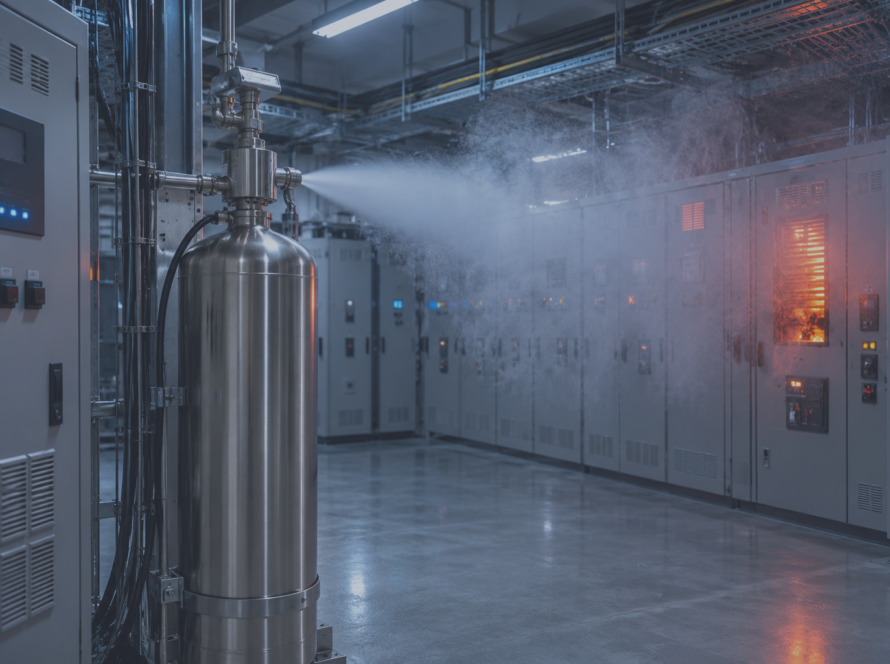
A fire suppression system is one of the most important investments a business can make. It protects people, equipment, and years of hard work in a matter of seconds. But here’s the catch: even the best fire suppression equipment can fail if it isn’t installed correctly.
Poor installation doesn’t just mean a system that looks messy. It means delayed response times, unprotected areas, and systems that fail exactly when they’re needed most. This article walks through the most common mistakes made during fire suppression system installation and how to avoid each one.
Why Proper Fire Suppression Installation Matters
Fire suppression systems are built to detect and control fires before they spread, but a system is only as reliable as the hands that install it. Get the installation wrong, and the consequences aren’t just theoretical. Equipment can get damaged before it’s ever used, fire response can be delayed at the exact moment it matters most, and buildings can end up in violation of regulations without anyone realizing it until an inspector points it out. On top of that, poor installation often means expensive repairs down the line and a higher overall safety risk for everyone in the building.
Understanding these common mistakes helps building owners, contractors, and facility managers make better decisions before, during, and after installation.
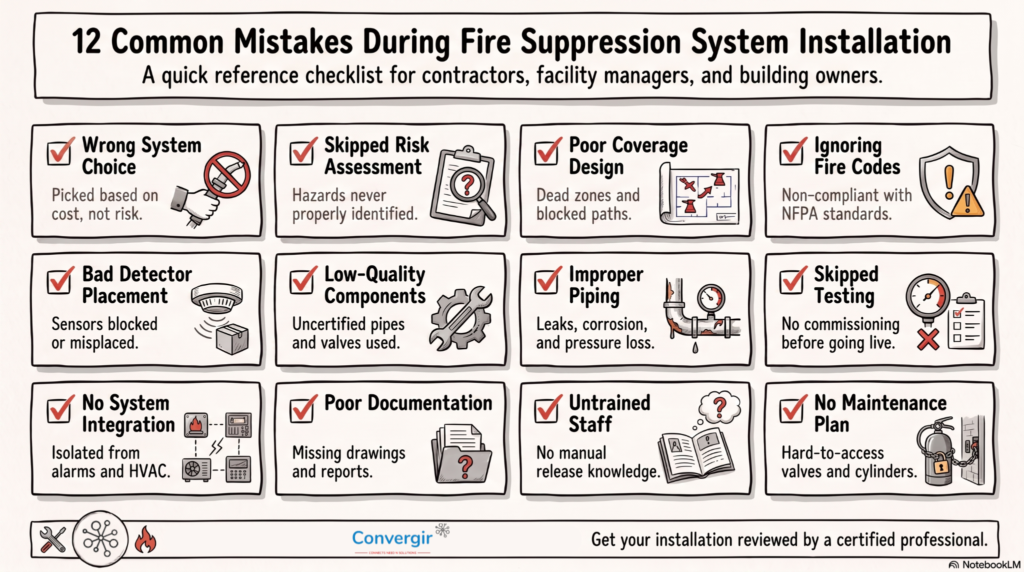
1. Choosing the Wrong Fire Suppression System
Not every space needs the same type of protection. Different environments call for different technologies:
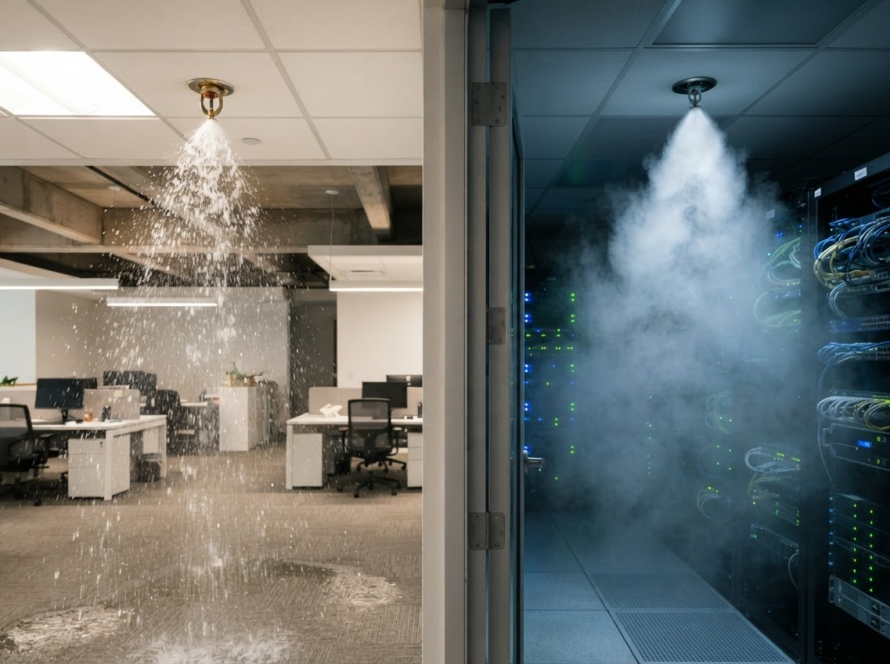
- Clean agent fire suppression system – ideal for server rooms and data centers where water damage isn’t an option
- Water mist fire suppression – well suited for museums, archives, and spaces with sensitive materials
- CO₂ systems – common in industrial machinery areas
- Foam systems – used for fuel storage facilities
- Wet chemical systems – standard for commercial kitchens
The mistake: Installing a system simply because it’s cheaper or more familiar to the contractor.
Best practice: Run a detailed fire risk assessment before selecting any suppression technology. The right system depends on what you’re protecting, not what’s convenient to install.
2. Ignoring Fire Risk Assessment
Many installations begin without a clear understanding of the actual fire hazards in the building. Risks that often get overlooked include:
- Electrical equipment
- Flammable liquids
- Chemical storage
- Battery rooms
- High-value assets
A suppression system should be designed around these specific risks, not fitted to a generic building layout. Skipping this step is one of the biggest reasons systems underperform later.
3. Poor System Design and Coverage
Incorrect nozzle placement or inadequate coverage leaves parts of a building unprotected. Common design issues include:
- Dead zones with no coverage
- Blocked discharge paths
- Incorrect pipe sizing
- Wrong discharge calculations
Professional hydraulic calculations and design software exist for a reason. Skipping them, or relying on rough estimates, is where a lot of installation problems start.
4. Installing Without Following Fire Codes and Standards
Every installation needs to comply with recognized standards, including NFPA guidelines, local fire regulations, building codes, and manufacturer installation instructions.
Ignoring these leads to:
- Failed inspections
- Legal penalties
- Insurance claim issues
- Unsafe operation during an actual fire
Compliance isn’t a box-ticking exercise. It’s the baseline for a system that actually works.
5. Incorrect Placement of Detection Devices
Detection devices are what trigger the entire suppression system, so their placement matters just as much as the suppression equipment itself.
Common mistakes include:
- Smoke detectors placed too close to air vents
- Heat detectors installed in the wrong locations
- Sensors blocked by furniture or equipment
The result is almost always the same: delayed activation when a fire actually starts.
6. Using Low-Quality Components
Using incompatible or uncertified parts can quietly reduce a system’s performance over time. This applies to pipes, valves, cylinders, nozzles, and detection panels.
Stick to certified products from reputable manufacturers. A system is only as strong as its weakest component.
7. Improper Piping Installation
Piping issues are easy to overlook during installation but expensive to fix later. Watch for:
- Poor pipe support
- Incorrect pipe slope
- Leakage
- Corrosion
- Pressure loss
Piping directly affects how efficiently the suppression agent reaches the fire, so this isn’t an area to cut corners on.
8. Skipping System Testing and Commissioning
Installation isn’t finished the moment the equipment is mounted. Proper commissioning should include:
- Pressure testing
- Functional testing
- Alarm integration checks
- Detection testing
- Agent discharge simulation, where appropriate
Testing verifies that the system will actually perform when it counts, not just that it’s been physically installed.
9. Forgetting Integration with Other Fire Safety Systems
A fire suppression system doesn’t work in isolation. It needs to coordinate with fire alarm systems, emergency shutdown systems, HVAC controls, access control, and building management systems.
When these systems don’t talk to each other, response during an actual emergency becomes slower and less coordinated.
10. Poor Documentation and Record Keeping
It’s easy to treat paperwork as an afterthought, but missing documentation causes real problems later. Keep records of:
- Installation drawings
- Test reports
- Maintenance schedules
- User manuals
- Compliance certificates
Good documentation means easier inspections, simpler maintenance, and faster troubleshooting when something goes wrong.
11. Lack of Staff Training
Even fully automated systems need trained people behind them. Staff should understand:
- Manual release procedures
- Emergency evacuation steps
- System shutdown procedures
- How to report faults
- Basic inspection routines
A perfectly installed system is still only half the picture if no one on-site knows how to respond when it activates.
12. Neglecting Future Maintenance Requirements
Installation should always be planned with future servicing in mind. This means considering:
- Easy access to cylinders
- Accessible valves
- Availability of spare parts
- Regular inspection schedules
- Ongoing maintenance contracts
A system that’s hard to service will eventually become a system that’s poorly maintained.
Signs Your Fire Suppression System Was Installed Incorrectly
Some warning signs are easy to miss until you know what to look for. Frequent false alarms are one of the clearest indicators that something in the design or detection setup is off. Low system pressure or warning lights that refuse to switch off are others, and both point to problems that won’t fix themselves over time. Incomplete coverage, leaking pipes, and visible corrosion are more physical giveaways, often noticed only when someone walks the site with a critical eye.
Obstructed nozzles are just as common, usually caused by furniture, stock, or equipment placed without anyone thinking about clearance. And if a system has failed inspections or the documentation is missing altogether, that’s a strong sign the installation itself was rushed or incomplete.
If any of this sounds familiar, it’s worth getting the installation reviewed by a professional.
Fire Suppression Installation Best Practices
A quick checklist to keep any installation on track:
- Conduct a professional fire risk assessment
- Choose the right suppression technology for the space
- Follow NFPA and local regulations
- Use certified equipment only
- Work with experienced, qualified professionals
- Complete full system testing
- Train employees on proper procedures
- Schedule regular maintenance
How Professional Installation Saves Money
Getting installation right the first time pays off well beyond fire protection. It leads to fewer repairs, lower maintenance costs, improved insurance compliance, better asset protection, reduced downtime, and a longer lifespan for the equipment itself. In other words, doing it properly upfront is almost always cheaper than fixing it later.
Why Choosing the Right Installation Partner Matters
The installer you choose has a bigger impact on system performance than almost any other factor. It’s worth looking for a partner that employs certified engineers and has genuine industry experience, rather than someone learning on the job at your expense. Ideally, they should also know their way around multiple suppression technologies, including clean agent and water mist systems, so the recommendation you get is based on your actual risks and not just what they happen to sell.
Strong compliance expertise matters too, along with the ability to handle installation end-to-end instead of passing pieces of the job to subcontractors. And the relationship shouldn’t end once the system is switched on. The right partner sticks around for ongoing testing and maintenance support, because that’s really where long-term reliability is won or lost.
Conclusion
A fire suppression system is only as effective as its installation. Mistakes like poor system selection, inadequate design, non-compliance, and skipped testing can quietly undermine even the best equipment on the market. Avoiding these pitfalls isn’t complicated, but it does require the right planning and the right people.
Investing in experienced professionals and following industry best practices reduces risk, improves compliance, and protects both people and property when it matters most.