


A fire safety system that was compliant and reliable ten years ago may not be either today. Buildings expand, codes evolve, and equipment ages, often quietly, until an inspection, a false alarm, or a near-miss reveals the gap. For facility managers and business owners across Chennai, knowing when to upgrade is as important as installing the system in the first place.
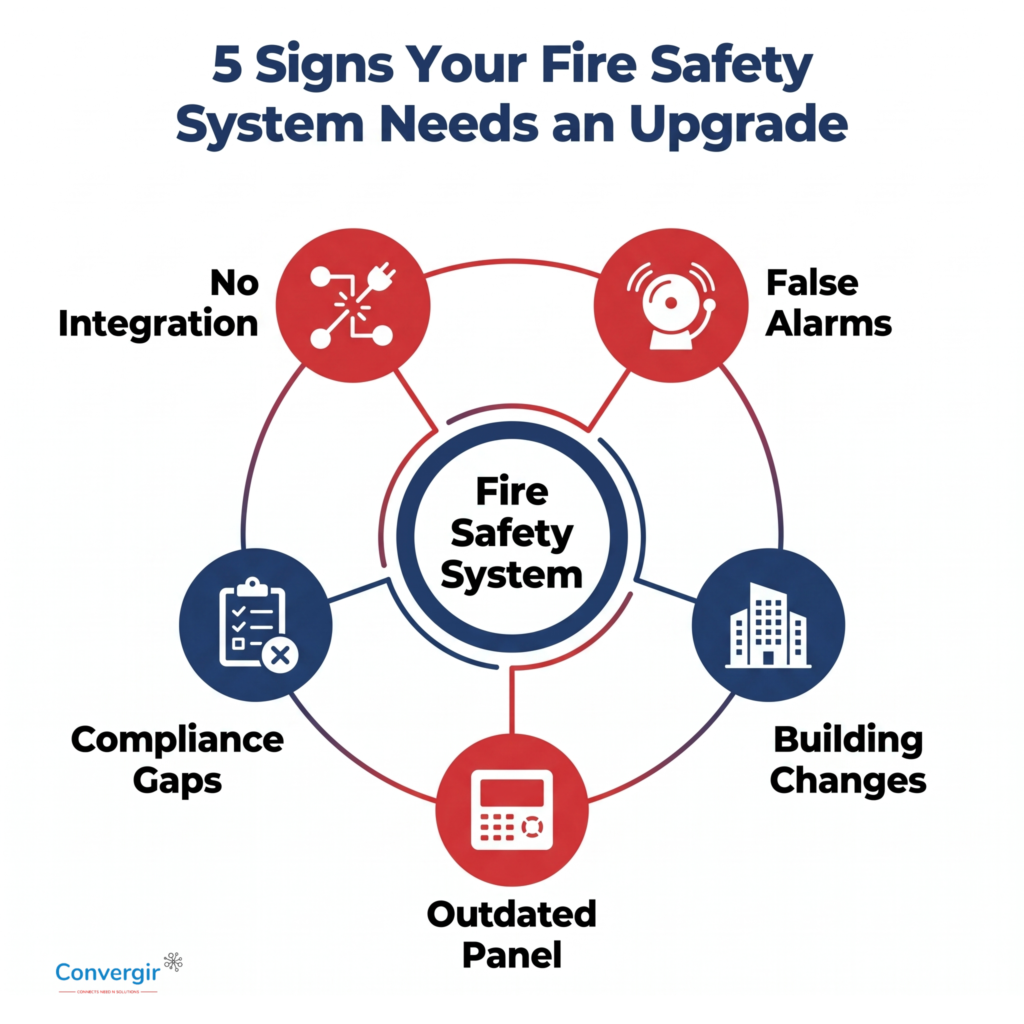
Here are five signs it’s time to take a closer look at your building’s fire safety systems.
1. Your Fire Alarm System Triggers Frequent False Alarms
Occasional false alarms happen. But frequent, unexplained triggers usually point to aging detectors, degraded wiring, or a conventional fire alarm system that’s no longer suited to your building’s size or layout. Beyond the disruption, frequent false alarms can lead to alarm fatigue among occupants, a real safety risk, since people become slower to respond when a genuine fire does occur.
If false alarms are a recurring issue, it’s worth having your system assessed to determine whether the problem is isolated (a faulty detector) or systemic (an aging panel or wiring network that needs replacement).
2. Your Building Has Expanded or Been Renovated Since Installation
Engineers design fire alarm and fire fighting systems around a building’s original layout, occupancy, and hazard classification. If you’ve added floors, converted spaces, changed how areas are used, or expanded your footprint since installing your system, parts of your building may now sit unprotected, blind spots your original design never accounted for.
This mismatch is one of the most common reasons inspectors flag a Fire NOC renewal: the system on record no longer matches the building as it actually exists.
3. You’re Still Running an Outdated Conventional Panel Where Precision Matters
Conventional fire alarm systems are a proven, cost-effective choice for smaller, simpler buildings but as facilities grow more complex, zone-level alerts aren’t always precise enough. If your building has expanded to multiple zones, houses critical infrastructure (server rooms, control rooms, high-occupancy areas), or you’ve had trouble locating the exact source of an alarm quickly, it may be time to move to an addressable fire alarm system, which pinpoints the exact device in alarm rather than just the zone.
4. A Recent Inspection or Fire NOC Renewal Flagged Non-Compliance
Authorities periodically update fire safety codes and standards, and older systems — even ones that fully complied at installation can fall out of step over time. If a recent inspection, insurance audit, or Fire NOC renewal has flagged gaps in your fire alarm, fire suppression, or fire fighting system, that’s a direct signal you need an upgrade, not just a repair.
Treating compliance flags as a one-time fix rather than addressing the underlying system gap often means the same issue resurfaces at the next renewal cycle.
5. Your Fire Alarm, Suppression, and Fire Fighting Systems Don’t Talk to Each Other
In many older buildings, different contractors installed fire alarm, gas suppression, and sprinkler or hydrant systems at different times, with no integration between them. That means a detected fire may not automatically trigger suppression, activate emergency lighting, or notify your monitoring service costing critical seconds at exactly the moment they matter most.
A modern, integrated fire safety system ensures detection, suppression, and notification work together automatically, rather than relying on manual coordination during an emergency.
When to Get a Professional Assessment
If any of these signs sound familiar, the safest next step is a site assessment, not a guess. A qualified fire safety engineer can evaluate your current system against your building’s actual layout, occupancy, and applicable codes, and recommend whether you need a full upgrade, a partial retrofit, or targeted repairs.
If your building’s fire safety systems haven’t been reviewed in a while, a site assessment is the clearest way to know where you stand. Request a site assessment and get a straightforward read on your current setup.
